The illusionist Derren Brown has studied the philosophy and psychology of happiness - and he argues that many of us could take a radical new approach to improving our wellbeing.
By David Robson
7 June 2019
Imagine that you are standing on one side of a river, and you want to reach a village on the other side.
You have a group of cheerleaders behind you, egging you on. So you set off, full of determination. But you have forgotten to take the river’s current into account – and no matter how hard you strain your muscles, you can’t quite overcome it. By the time you reach the other bank, you have been pulled far from the place you intended to be.
We may not like to admit it, but our life follows a similar trajectory – as forces beyond our control drag us from our chosen path. And the importance of recognising this fact is just one of the many lessons I learnt from Derren Brown, the illusionist, "mentalist" (mind-reader) and writer, whose book Happy explores the philosophy and psychology of wellbeing.
Most self-help books would suggest that you can fight life’s currents with determination and positive thinking. But taking inspiration from ancient Greek and Roman philosophers like the Stoics and 19th Century German thinker Arthur Schopenhauer, as well as modern scientific research, Brown believes that this is simply a recipe for disappointment and frustration. “We’re better off making our peace with the fact that that is the dynamic of life – rather than creating a false idea that we can somehow control everything to bring it in line with what our goals are,” he says.
As part of BBC Reel’s new Rethink series, I sat down with Brown to discuss the inspiration for his book and the reasons that ancient philosophy is essential to cope with the peculiar demands of the 21st Century.
The concept of Happy might seem like a departure from Brown’s well-known stage shows and TV programmes, but he points out that his illusions have often played with the mind’s blindspots. “Magic is a great analogy for how we edit our experiences.”
How so? Magicians, he says, try to tell a convincing narrative that dismisses certain inconvenient facts – and that’s exactly what the brain does as it compiles our life story. “It took me a long time to realise that. When I did realise that, I saw that magic wasn’t just this childish way of trying to impress people, but actually it sort of held a clue as to how we how we process reality and therefore might better live in accordance with it.”
You might tell yourself that you’re an awkward misfit, for instance – and so you only remember the times when you acted embarrassingly. Or you might only ever pick bad relationships, because your overarching story is that you are “unlucky in love”.
We often adopt these stories from a young age, he says. “A lot of the narratives we inherit come from when we’re really small, from our parents, who have their own set of frustrations – their own unlived lives,” he says. “And for better or worse, we take all that on board and we go out in the world thinking that maybe we have to be successful to be loved, or that we have to always put other people’s needs first, or that we have some big secret that we couldn’t possibly tell people.” Recognising the sources of these narratives can go some way to reducing our anxiety and unhappiness, Brown says. (For more on the power of storytelling to shape our health and happiness, see our recent in-depth story on the subject.)
Today, the stories that we tell ourselves may also be shaped by the self-help industry’s promotion of positive thinking, determination and self-belief. While it might initially feel empowering to see ourselves as the beleaguered hero who relentlessly pursues their goals through sheer willpower, Brown argues that for most people, it will only lead to disappointment. (In Happy, Brown is particularly scathing of Rhonda Byrne's The Secret.)
One problem is that we often aren’t very good at choosing the right goals. “We have a terrible understanding of what fulfils us.” Many people set their sights on money, for instance – but psychological research has shown that, beyond the certain level of wealth needed for basic comfort, riches do not bring greater happiness.
View BBC Reel’s video of Derren Brown explaining the downsides of relentless optimism, and the difference between the “experiencing self” and the “remembering self”
If you’re not convinced, Brown suggests the following thought experiment: imagine that you woke up one day to discover that you were the only person left living on Earth. With no one else around, you’d be able to go and live in any house you wanted – Buckingham Palace even. But would you want to? “You would probably find somewhere that was just comfortable and practical.” The same goes for your expensive clothes, fancy cars, or the latest technology. “When you really follow that thought through, it’s amazing how much we acquire and want only to impress other people.”
Even if we do choose the right goals, the positive-thinking movement can place too much responsibility on the individual; if we haven’t succeeded, it’s our own fault for not having wanted it enough. Worse still, the kind of inflated personal belief that is promoted by certain gurus may cause us to ignore the criticisms of those around us, even when they might be offering a more realistic view of our chances.
Ultimately, the success stories we hear are the anomalies. Just think of all the motivational autobiographies out there: all giving the impression that determination was the key to success. “You just never read the biographies of businessmen who have failed,” he says – yet there will be many out there who had all the self-belief, but just never managed to make it. After all, as many as nine out of ten start-ups end up bombing.
Brown, of course, isn’t arguing that we should simply give up on our dreams. But if we return to that idea of the swimmer crossing from one bank to the other, it’s no good ignoring the currents pushing against us or believing that our force of will alone will overturn them – it is inevitable that you are going to be dragged off course.
If positive thinking can’t make us happier, what can? Brown argues that a healthier attitude to life comes from the Stoics, the ancient Greek philosophers who argued that we should actively and deliberately distinguish between the things that are within your power to change, and the things that aren’t – which we should learn to accept as a necessary part of life.
“I find myself doing this a lot that when something’s really bothering and frustrating me. I just think which side of the line is it on? Is it my thoughts and actions? Or is it something out there? It’s always something out there, it’s someone else’s behaviour. So then I think well, what if it was fine that that person is an idiot, or that my partner can’t handle stress well, or something like that – things that kind of end up having an effect on me, but actually, what if it’s fine, that that’s just their thing? It’s a very helpful thought, because then you take all the stress off yourself. You can then still work out how to help that person if you want, if that’s appropriate, but you kind of emotionally just disconnect from the pain of it.”
He gives an example of a game of tennis, but he says that same applies to any major challenge. “If you go into the game thinking ‘I must win’, that's out of your control. So if you start to lose, you feel like you're failing and then you become anxious… But if you go into a game of tennis thinking ‘I'll play as well as I possibly can to the best of my ability’ – that is under your control, and it doesn't matter if you start to lose – you won’t feel the frustration of failure, because you’re not failing, you’re still sticking true to your goals.”
Similarly, you can go into a job interview with the full knowledge that even if you perform your absolute best, the employer’s final decision is still beyond your control, and you can afford yourself a little compassion if you don’t make it. Brown says that this lowers our emotional “centre of gravity”, making us more resilient to life’s challenges. “[The Stoic’s] model of happiness was about avoiding disturbance.”
Brown also advocates the Stoic practice of premeditation every morning to prepare the mind for the day ahead. “It is, quite simply, spending a few minutes every morning, thinking about the day that lies ahead, and what the kind of traps are likely to be where you’re likely to let yourself down, and just anticipating them and thinking them through,” he says. This deliberate self-reflection – taken from a distanced perspective, when we are in a more rational frame of mind – reminds us that some things will be out of our control, and need not be the source of upset. At the same time it helps us to navigate the challenges that arewithin our control more wisely, so that we don’t just make the same mistakes again and again.
One of the best ways of achieving this, he says, is to leave the phone out of the bedroom. “It’s a little reminder that okay, instead of just browsing Twitter, I’ll think about what’s going to happen today and how I can meet those things in a more useful way.”
A sceptic might question whether these ancient philosophies can be relevant in today’s turbulent times, but Brown argues that it is just as relevant today as ever before. “The Stoics appear during a huge time of constant wars and real political strife. And it became very popular, I think, because it’s a way of distancing yourself from strife and keeping your centre of gravity within you.” He emphasises that this is not an excuse to remain passive or apathetic – it simply helps you to find some personal peace in the turmoil, and some perspective in the battles we do choose to fight, rather than resorting to outrage in every disagreement.
The more detached approach might also help us to deal with the trials of social media and to remember that the truth of someone’s private life is often very different from the perfect exterior we present to the world. “It must be very difficult growing up, when that [social media] is really all you know, and you’re comparing that to this sort of horrible, ugly, messy version of yourself that you know, exists,” he says. “It’s hard to remember that everybody else has one of those as well.”
With that in mind, I wonder how much we are simply seeing a public facade of Brown himself. But as far as you can tell from our short conversation, the Stoic approach of accepting our lack of control certainly seems to bring him moments of relief in his hectic life.
“It’s like that feeling when you’re a kid and you think you’ve got to get up for school and you realise it’s a Saturday,” he says. And that’s the kind of contentment that we could all hope to achieve.
--
David Robson is a senior journalist at BBC Future. He is @d_a_robson on Twitter.
Join more than one million Future fans by liking us on Facebook, or follow us on Twitter or Instagram.
If you liked this story, sign up for the weekly bbc.com features newsletter, called “If You Only Read 6 Things This Week”. A handpicked selection of stories from BBC Future, Culture, Capital, and Travel, delivered to your inbox every Friday.
Sometimes we just know something will happen and it does. But experts say channeling that experience into decision-making is an error that leads to mistakes.
On 8 November 2016 – US election night – the betting odds of Donald Trump winning the presidency had narrowed to five to one. By the following morning, he'd managed to pull off a feat many thought impossible, but that didn't stop the I-told-you-sos – friends, family members and even online soothsayers – who claimed to have known all along that Trump would triumph despite such bad odds.
To a lesser extent it happened in November 2008 too, when Barack Obama won the election. After accepting the Democratic nomination three months earlier, his chance of victory hovered around 60%. When he won, you may well have been one of those who ‘knew’ that was going to be the outcome, and imagined that his odds of winning had been much, much higher. But just because he won didn’t change his odds of winning prior to his victory.
This is hindsight bias – a phenomenon in which we revise probabilities after the fact or exaggerate the extent to which past events could have been predicted beforehand. Politics doesn’t have a monopoly on this: we’re guilty of hindsight bias when we talk about the weather (there’s only a 20% chance of rain, but you say it’s going to rain and it does, and suddenly you have better forecasting ability than the experts); it happens at sporting events, in court rooms, in medical decisions and in business.
In fact, hindsight bias is one of the most widely studied of what are known as ‘decision traps’, in which people routinely employ mental shortcuts tosimplify decisionswhen they're not certain; decisions that are often skewed by cognitive biases: we guess something improbable will happen and it does, but those probabilities never changed – and, believe it or not, nobody possesses supernatural abilities.
Causes and consequences
According to Nobel Prize-winning American economist Richard Thaler, businesses may be more prone to hindsight bias than other entities. In one study, researchers foundthat 77.3% of entrepreneurs in charge of failed start-ups believed that – before the failure – their company would grow into a successful business. After they failed, only 58% said they had originally believed their company would be a success.
In an interviewThaler gave to business magazine McKinsey Quarterly, he said if a CEO decided to gamble on an idea that looked good, then a few years later it turned out a competitor came up with a better product, “the CEO is going to remember, ‘I never really liked this idea’”.
Thaler says a simple fix could be to write things down; to make a record of how a decision was made at the time so that companies can learn lessons after the event. “Any company that can learn to distinguish between bad decisions and bad outcomes has a leg up,” he says. “Memorialise the fact that the CEO and the other people that have approved this decision all have the same assumptions, that no competitor has a similar product in the pipeline, that we don't expect a major financial crisis.”
Kathleen Vohs, a social scientist at the University of Minnesota's Carlson School of Management,co-authored a 2012 paper on hindsight biaswhich found that its consequences included “myopic attention to a single causal understanding of the past (to the neglect of other reasonable explanations) as well as general overconfidence in the certainty of one’s judgements”.
Vohs says some are more prone to hindsight bias than others. If, for example, you are in the kind of profession where you receive a lot of timely and clear feedback before you render a decision, like accounting, you’ll tend to show a smaller level of hindsight bias.
Much of the business world, though, is unclear in terms of what causes success or failure – which is often due to multiple factors. “When you have ambiguity like that… people can come up with a mental causal pathway in which they believe they can see how something would have occurred - ‘oh, I can see very clearly how that would have happened’ – [then] you have a higher level of hindsight bias,” she says.
Drew Boyd, executive director of the University of Cincinnati’s MSc Marketing programme, says one direct result of hindsight bias is something called stereotypy. “It happens in business a lot when you think that something that has happened before is going to happen again. It seems to make sense. But then it doesn’t happen again and you wonder what happened.”
“Business people will decide on a strategy because it worked for them before. But the conditions in the next environment are going to be different: it’s a different market situation, different people, and it’s a mistake to immediately assume that what worked before is going to work again.”
How to de-bias and improve your decision-making
Boyd says a good way to avoid such errors is to start again: “Consider what happened before, but fold in new pieces of information, widen the field, incorporate new data along with old data. What people have to remember is they’re succumbing to an even broader bias called omission neglect – a tendency to consider only the evidence we have available to us.”
The saying goes that hindsight is 20:20, but Boyd says it’s worse than that. “It makes people think they can look back at past events and interpret something; it makes them think they have new ability to predict.” He says that in order to correct for hindsight bias, you have to realise you don’t possess a crystal ball.
“We try to teach people to use what we call Bayesian thinking. [Eighteenth Century English statistician] Thomas Bayes’s premise was to consider all sources of information but weight them: some information is more valuable, but all information has some value. Weight that information appropriately and you tend to make the best decision… make decisions based on what the data says is likely to happen, not what you think is going to happen.”
American businessman Warren Buffet, Boyd says, has a formula he calls ‘value investing’. “He follows it, but he knows the odds of succeeding are what they are. He doesn’t always hit magic; he loses occasionally, but he doesn’t say the odds were against him those times. Successful people understand risk for what it is and don’t make revisions in hindsight. Go with the odds, not the gods.”
Kathleen Vohs says there is one de-biasing tactic she favours known as the ‘consider the opposite strategy’. Before rendering a decision you should flip it and think: how could this not have gone the way you anticipated? “Once you have your little narrative in your mind, think: how could the outcome go in a different direction or not occur at all?” she says. “If you flip the script like that in a number of ways you can reduce hindsight bias.”
Vohs says this method has the effect of disrupting your confidence. “Anything that reduces people's confidence in predicting something will happen or the pathway in which something will happen is a good way to go about it.”
To comment on this story or anything else you have seen on BBC Capital, please head over to ourFacebookpage or message us on Twitter.
If you liked this story, sign up for the weekly bbc.com features newsletter called "If You Only Read 6 Things This Week". A handpicked selection of stories from BBC Future, Culture, Capital and Travel, delivered to your inbox every Friday.
When it comes to politics and international diplomacy, names matter. We know they matter because people are always changing them. Two important addresses changed this week
The Russian embassy in Washington found itself situated not on Wisconsin Street but Boris Nemtsov Plaza, named after a Russian opposition politician.
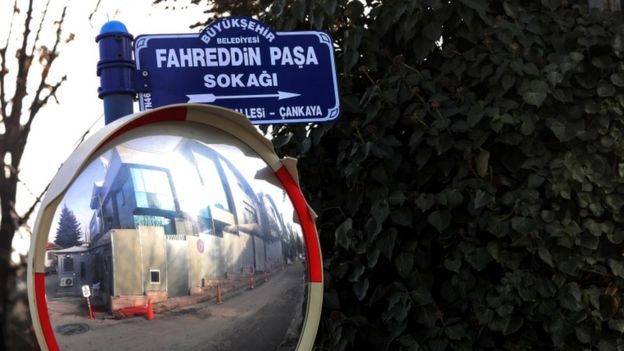
And in Turkey, the embassy of the United Arab Emirates is now on Fahreddin Pasha Road.
The Turkish situation was very 2018 in that it was the result of a Twitter feud.
The foreign minister of the United Arab Emirates, Abdullah bin Zayed al Nahyan, shared a tweet alleging that a century ago, the Turkish Ottoman military commander Fahreddin Pasha had mistreated Arabs while he was governor of the holy city of Medina.
The allegation was compounded by an accusation that ancestors of the current Turkish president Recep Tayyip Erdogan were involved in the mistreatment too.
Mr Erdogan was not happy.
Image copyrightAFP/GETTYImage captionTurkish television carried footage of the street signs being changed
One politician in Moscow called the name change "a dirty trick".
Image copyrightGETTY IMAGESImage captionA fierce critic of Vladimir Putin, Boris Nemtsov was fatally shot near the Kremlin in 2015
These are just the latest examples of the centuries-old recognition of the power and importance of names.
If you search online for the address of the United Kingdom embassy in Tehran, Iran, you'll be told that it's 198 Ferdowsi Avenue.
Iranians got good at changing names in the early 1980s. Thousands of streets and buildings named for the regime of the deposed shah were instead dedicated to mark the Islamic revolution.
In what was originally a prank, a group of students changed the signs where the British embassy was located to read "Bobby Sands Street", after the high-profile IRA activist who died in prison on hunger strike while serving a sentence for firearms offences.
Weirdly, the name stuck. So instead of having an official address which memorialised someone who considered the British state the enemy, British embassy staff decided to start using the back door instead, thereby changing their postal address.
And as Ferdowsi is considered to be the Persian national poet, perhaps they reasoned a street named after him was safe from being changed.
If renaming streets is controversial, renaming whole countries is critical.
You don't hear the phrase Upper Volta on the BBC any more. Burkina Faso - or land of the upright people - tells us that this is a country no longer colonised by another nation - the French - who decided that the best way to denote the territory would be a purely geographical one.
The break-up of Yugoslavia in the 1990s revived the idea of Macedonia as a nation. But Macedonia is also the name of the bordering region of Greece. So what to call the new country?
Independent Macedonia? Republic of Macedonia? Negotiations over the use of the name have been going on ever since with little sign of a breakthrough - until now.
Image copyrightGETTY IMAGESImage captionMatthew Nimetz is hopeful that Greece and Macedonia can settle their naming dispute
So the clock may be ticking for "the Former Yugoslav Republic of Macedonia", or FYROM, the inelegant fudge which has been used in the meantime.
Names matter whether you're talking about a street, a country or a human being.
When he became a Muslim, it meant a lot to Cassius Clay that he be known to the world as Muhammad Ali.
It took six more years until US newspapers stopped calling Ali by what he deemed his "slave name". And the reason we attach so much importance to names is that they tell the world something about us.
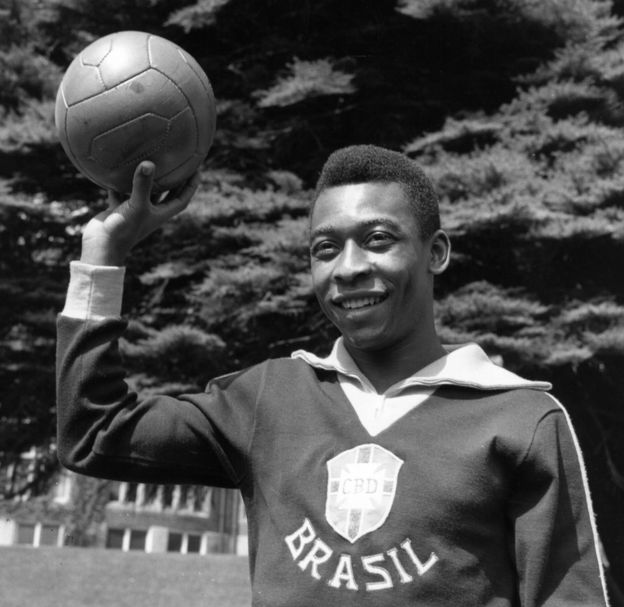
It can be something unique. Brazilian footballers traditionally go by nicknames. Edson Arantes do Nascimento means almost nothing. Pele means everything.
Image copyrightGETTY IMAGESImage captionEdson Arantes do Nascimento, aka Pele
That's despite the man considered by some to be the greatest ever football player saying in his autobiography that he has no idea where the name came from.
So there's power in choosing a name, power in changing it, and - as both religion and mythology tell us - power in guarding it.
My partner and I are being assessed as prospective adopters at the moment. We've been told about the importance of identity to a child who has suffered loss and trauma.
We're told that changing a child's birth name, no matter how much you might dislike it, could be damaging.
Imagine having nothing but your name, and having that taken away by the new parents you were told would love and protect you.
In Jewish tradition, only the high priest in the Temple of Jerusalem was allowed to utter the four-letter name of God - and even then only once a year.
The Egyptian goddess Isis gained complete power of the sun god Ra when she learned his true name.
So what we call things can border on the magical. Names matter.
As a freelancer working solo from home, while my housemates head out to work, I justified a very active social life as basic human necessity. Yet when it dawned on me just how much time I was spending socialising, I realised I may be taking it to an extreme.
I calculated that, on average, I was spending 22 hours or more each week on social activities. So, in a bid to see what would happen to my work output, health and wellbeing, I decided to try and cut out my social life entirely.
I knew, at times, I filled my schedule simply out of fear of missing out (FOMO), an inability to say no, but also as a sneaky way to procrastinate or shift focus away from my work.
Idle moments are crucial for creativity and mind wandering has been linked to creative problem solving (Credit: Getty Images)
For one month, I declined all in-person activities with friends: going out for drinks; coffee catch-ups; dinners; parties and non-work related events, to see if it would make me more productive, improve my focus and career prospects.
Thirty-one days later
On day one of the month-long experiment, I had to confront some deep-seated anxiety over missing out. For me, FOMO often stems from a tyranny of choice – when there are several enticing options available for a Saturday night, how do I know I’m making the right choice?
For me, FOMO often stems from a tyranny of choice
But as the days passed, the FOMO began to subside and I started to relax. I only had one option to consider for Saturday night – to stay home – and this limitation left me more satisfied in my decision. I used to berate myself for staying in on a Friday night or leaving an event too early, but during the experiment I felt more content working, reading or watching Netflix instead of dwelling on the other things I could be doing.
A fun-free schedule also allowed for more ‘deep work’ (something computer science professor, Cal Newport, defines as the ability to focus without distraction on a cognitively demanding task). No longer distracted by what I could be doing, or what fun everyone else was having, I was able to build concentrated pockets of work into my week at times that were usually reserved for socialising, such as spending Friday nights doing admin or Saturday mornings writing in a café.
I came to embrace doing nothing and relish the moments of solitude
Embrace boredom
While I found more time to work, I also noticed a change in my overall health and wellbeing. I found myself cooking more at home, doing daily exercise, getting to bed earlier each night, reading, and relishing moments of rest and boredom throughout the day.
Even with a new-found appreciation for cooking and spin classes, having no social life left me with more free time than I’d imagine, and the boredom and loneliness often associated with ‘doing nothing.’
Fear of Missing Out can lead to filling out your calendar just to feel busy (Credit: Getty Images)
I came to embrace doing nothing and relish the moments of solitude. I went on meandering walks, sat at cafés without any technology, and found myself daydreaming more frequently as I was no longer attempting to fill every spare moment.
Such idle moments are crucial for creativity, and mind wandering has been linked to creative problem solving. When your mind is able to wander, it is accessing memories, emotions and random bits of stored knowledge, says Amy Fries, author of Daydreams at Work: Wake Up Your Creative Powers and a writer and editor for Psychology Today.
During the experiment I found myself regularly brainstorming new ideas and reimagining existing projects.
Doing nothing can be as equally energising as time out spent with people, and is in fact necessary in order to recharge, says Pedro Diaz, CEO of the Workplace Mental Health Institute in Sydney.
There is research to support his claim: a 2016 study of 48 people, which measured their mental state, mood, fatigue and stress over 12 days, found that extraverted behaviour raised people’s moods and energy levels – but this behaviour also led to higher fatigue after a three-hour delay. While a small sample, it does support the idea that focused activity – be it socialising, working or studying – takes its toll.
Perhaps it’s not the amount of socialising or work we engage in that can lead to exhaustion, but the lack of proper breaks from either
This observation raised an important question – perhaps it’s not the amount of socialising or work we engage in that can lead to exhaustion, but the lack of proper breaks from either.
“We don't place enough importance on being alone and most people don't even know what they need to do to give their brain and their nervous system a good rest,” says Diaz.
In a society where busyness is worn as a badge of honour, it can be difficult to decipher if having little-to-no social life is an inevitable consequence of working life, or a way to signal our own importance to others.
Extraverted behaviour raises people’s moods and energy levels but also leads to higher fatigue after a three-hour delay (Credit: Getty Images)
“When you signal you're busy, you’re basically telling others that you are high status and important, not because what you wear is expensive, but [because] you are extremely desired and in high demand,” says Silvia Bellezza, co-author of a Harvard Business School study that argues that and overworked lifestyle, rather than a leisurely lifestyle, has become an aspirational status symbol.
The pitfalls of no friends
The positive effects of solitude – for example, increased clarity of thought and a sense of feeling recharged – would be a concern if I remained isolated in my antisocial bubble at home for too long.
For many working in an office environment, socialising is one of the most important elements of working life and people with a ‘best friend’ at work are seven times more likely to engage fully in their work. Workplace camaraderie also creates a common sense of purpose and a social support network that can lead to promotions and professional advice.
It’s not the amount of socialising or work we engage in that can lead to exhaustion but the lack of proper breaks from either (Credit: Alamy)
Of course, off-hours socialising is also an important way to build work contacts. While one month of no social life did not impact my relationship with existing clients, if I continued it may have diminished my ability to build new ones.
Work and play
Rather than striving for a distinct work-life balance, we may be better off trying to bring our social life into our work. It occurred to me that perhaps the secret to a successful career is not cutting out your social life, but integrating the two.
Ellen Galinsky, co-founder of the Families and Work Institute, has found that people who are dual-centric – having more than one interest or central focus with equivalent priority – are the most satisfied in their lives overall.
“We find that people who are dual-centric tend to be healthier, do better at work and do better at home,” says Galinsky. “If you have just one focus in your life and something goes wrong, it's pretty devastating. If you have other things that are important to you – it might be something creative, playing a sport, community, or having a circle of friends, you tend to do better overall.”
During the experiment, I didn’t simply replace my newfound spare time with extra work but rather became more dual-centric. I was able to build in more concentrated pockets of work where I otherwise wouldn’t, but I also gravitated to activities that were previously neglected – the gym, practising the piano, and meditation.
I’ve learned that I can’t neatly cut out an area of life in order to propel another – a connection with people is inextricably linked to our work and helps us deal with life’s inevitable ups and downs.
Post-experiment, I have redefined what success looks like to me – it isn’t all work, or all play, or all balance, but a mix of different engagements within each day, and a steady smattering of breaks in between.
To comment on this story or anything else you have seen on BBC Capital, please head over to ourFacebook page or message us on Twitter.


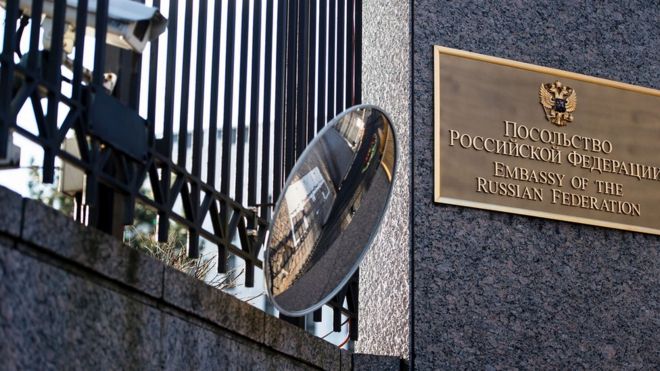 The Russian embassy in Washington found itself situated not on Wisconsin Street but Boris Nemtsov Plaza, named after a Russian opposition politician.
And in Turkey, the embassy of the United Arab Emirates is now on Fahreddin Pasha Road.
The Turkish situation was very 2018 in that it was the result of a Twitter feud.
The foreign minister of the United Arab Emirates, Abdullah bin Zayed al Nahyan, shared a tweet alleging that a century ago, the Turkish Ottoman military commander Fahreddin Pasha had mistreated Arabs while he was governor of the holy city of Medina.
The allegation was compounded by an accusation that ancestors of the current Turkish president Recep Tayyip Erdogan were involved in the mistreatment too.
Mr Erdogan was not happy.
 AFP/GETTY
 GETTY IMAGES
 GETTY IMAGES
 GETTY IMAGES


